TL;DR: A board-and-train day at Dog Training Camp USA runs from early morning to late evening and is built around a purposeful rhythm: potty, breakfast, mandatory rest to prevent bloat, supervised play, focused leash and obedience work, place training to teach calm, and plenty of naps. Dogs come out of their kennels around 13 times a day, practice manners at every door, and, in three-and four-week camps, go on real-world field trips. Kennels are laid out so dogs stay calm, about 80% of training happens outdoors, and while no one stays overnight, the facility has 24-hour camera monitoring and an alarm system. It’s a full, structured day designed to send home a calmer, more responsive dog.
“What will my dog actually do all day?” It’s one of the first questions we hear from owners thinking about a board-and-train program. Right behind it: How long will my dog be in a kennel?
Is anyone there at night? Will my dog forget me?
Fair questions. You’re handing over a member of your family for a few weeks, and you deserve to know what happens after you drive away.
So here’s an honest walk through a typical day at one of our dog training camps in Shepherdsville, KY, from the first potty break of the morning to lights out. (And no, your dog won’t forget you. We’ve never had one do it.)
One note before we start: every dog is different, and we don’t run a one-size-fits-all program.
Dogs here for service work, advanced training, or serious behavior issues get a schedule built around those goals. What follows is the general shape of a normal day.
Early Morning: Potty, Breakfast, and Mandatory Rest
Our day starts early. In winter, trainers arrive around 6:30 AM. In summer, we start closer to 5:00 or 5:30 AM so we can get most of the hard work done before the Kentucky heat sets in.
First thing, everyone goes out for a potty break: about five minutes on leash to sniff around and take care of business. Then it’s breakfast. While dogs eat, we clean up anything from overnight.
After breakfast comes something many people don’t expect: one to two hours of mandatory rest. That’s on purpose. The first activity of the training day is running and play, and letting a dog run hard on a full stomach raises the risk of bloat (gastric dilatation-volvulus, or GDV), a dangerous condition where the stomach fills with gas and can twist. Some dogs are more prone to it than others, but it’s a risk we won’t take with anybody’s dog. So rest after meals is built into every single day.
Mid-Morning: Structured Play Comes First
Once breakfast has settled, dogs get to air out. After years of trial and error, we’ve learned that training goes better when a dog gets to burn off energy before we ask for focus.
That doesn’t mean a free-for-all. Play is always supervised by a trainer, usually one-on-one or in a very small group with carefully planned introductions. A session runs about 15 minutes.
For the first couple of minutes, the trainer mostly lets the dog do its own thing. That’s where we learn a lot. Is this dog toy-motivated? Does it only want to sniff? Will it explore on its own, or is it too nervous to leave a person’s side? Those observations shape the training decisions that
come later.
The rest of the session has rules. The dog feels like it’s playing, but it’s also practicing recall, learning not to jump when it comes back, and figuring out what behavior is appropriate in a looser setting.
Late Morning: Leash Work, Obedience, and Place
After play, it’s time to get to work. Now that the dog has blown off some steam, we ask for focus with:
- Leash walking
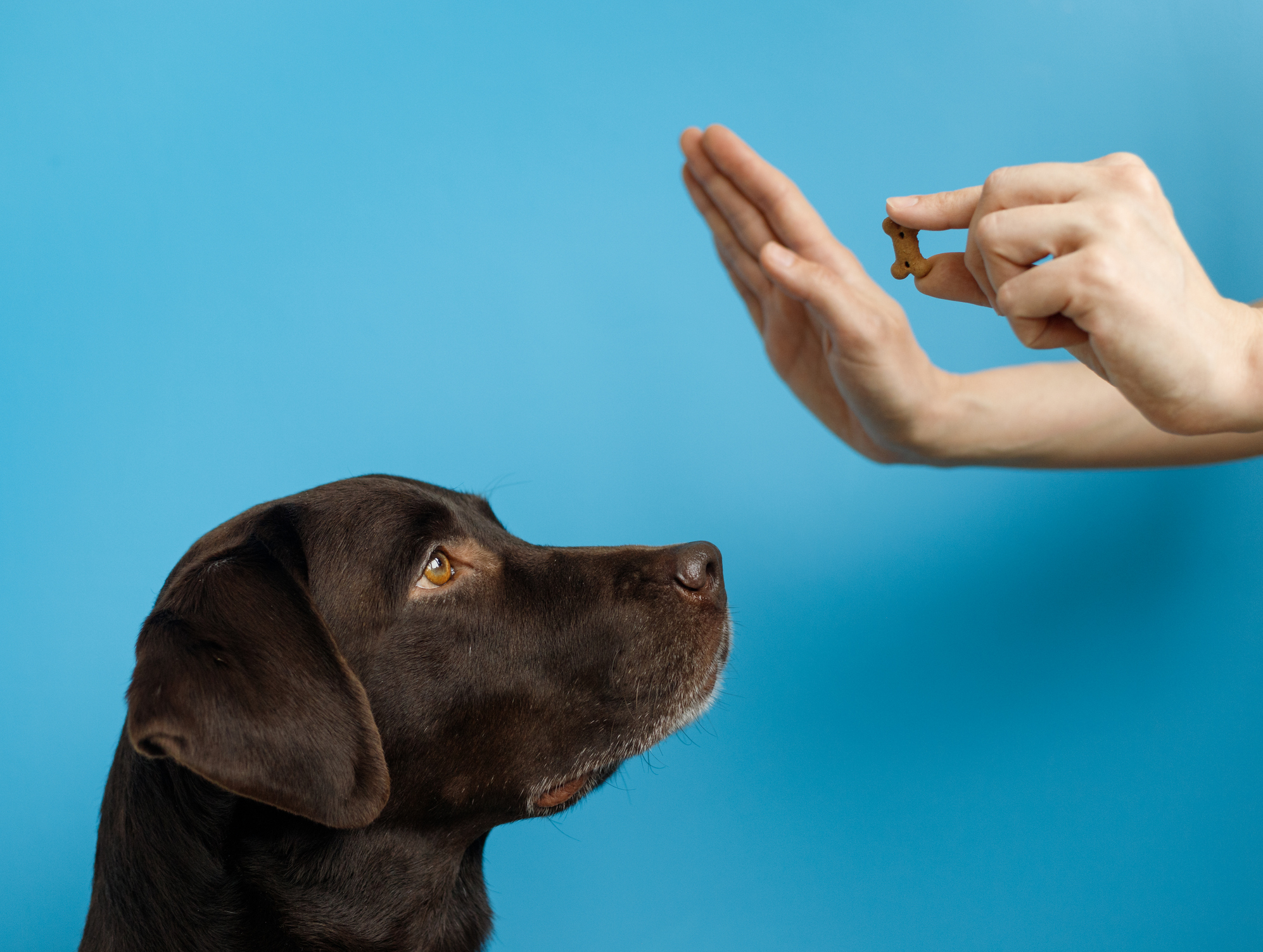
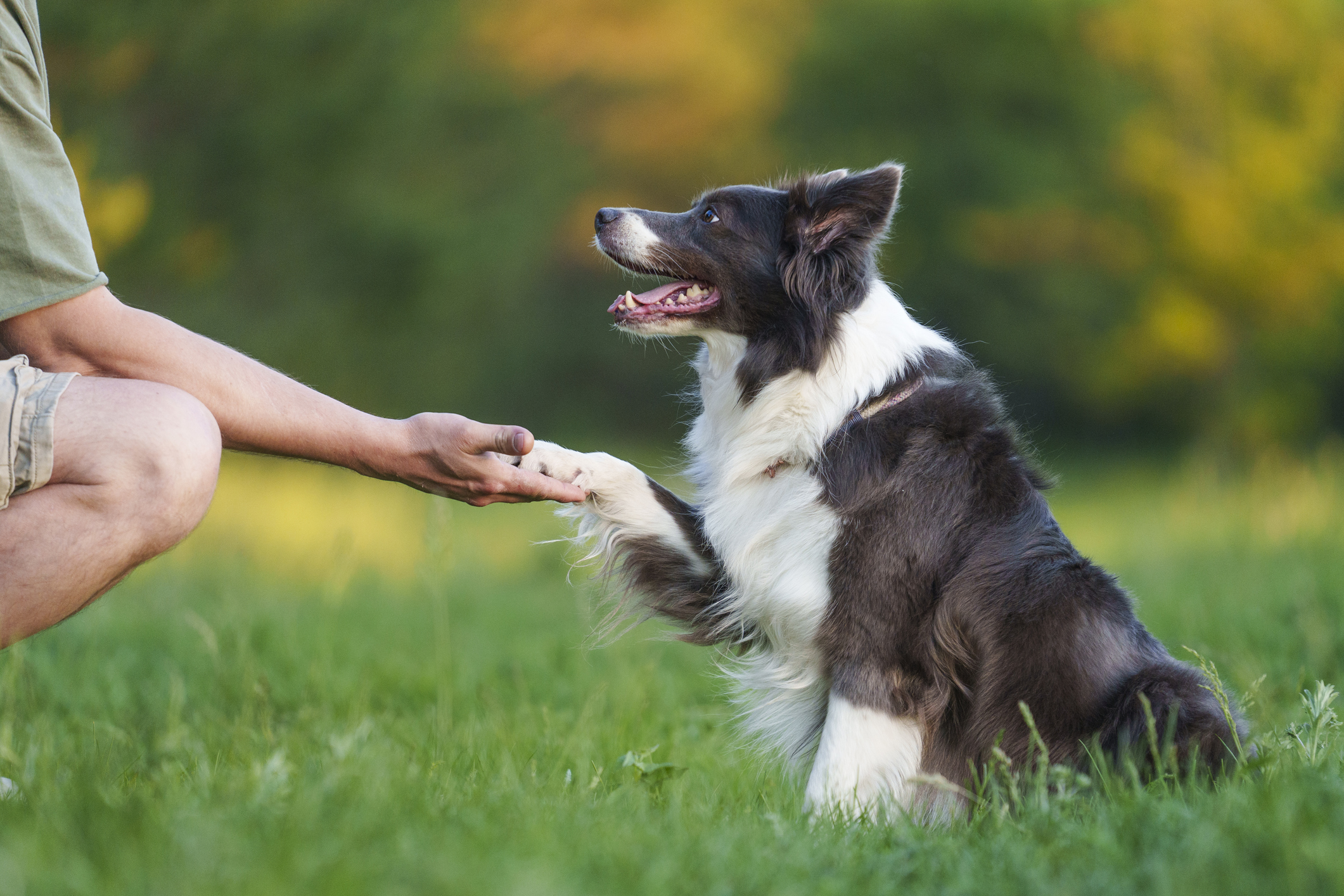
- Basic obedience commands
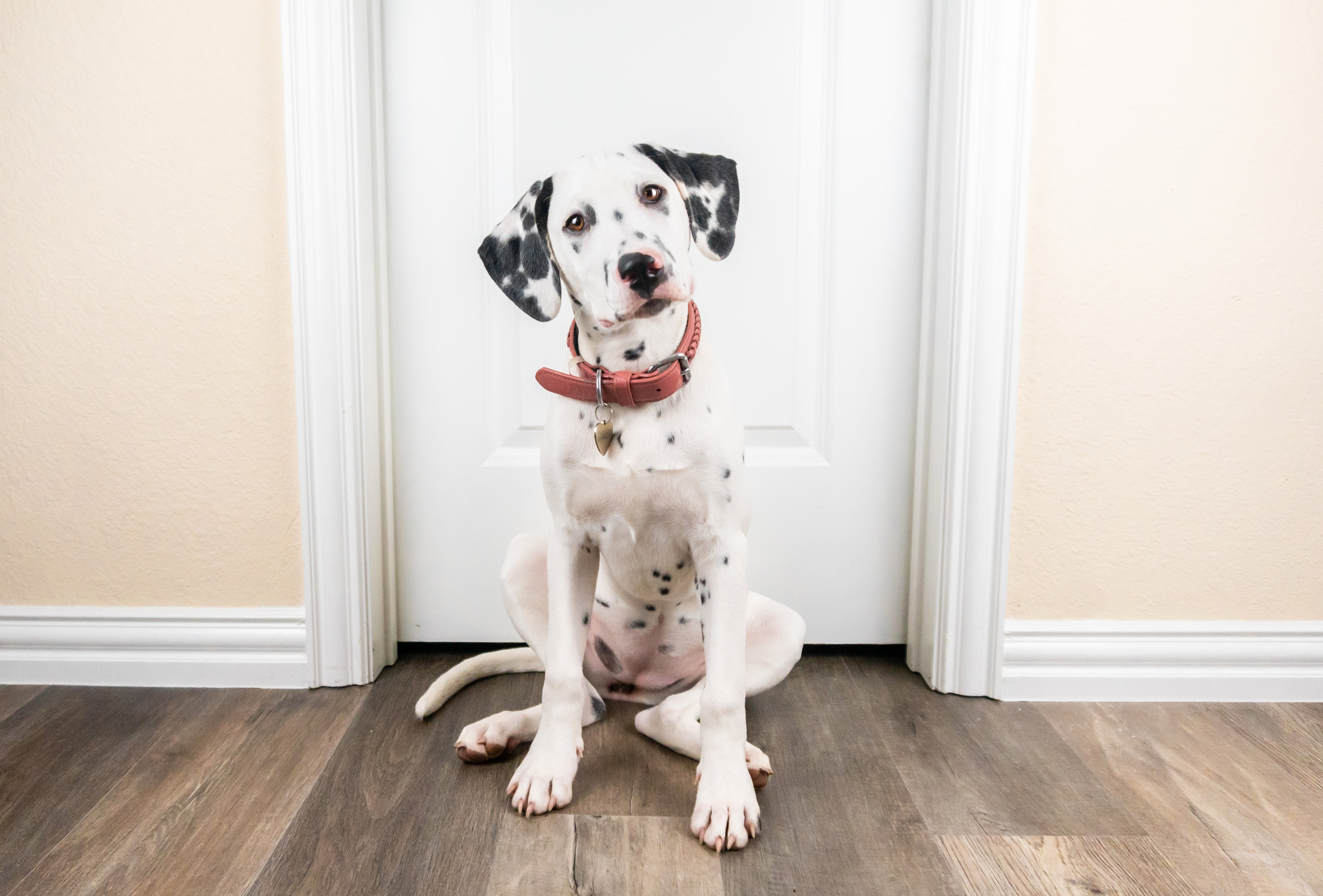
- Sitting at every door
- Boundaries, like keeping feet and mouths off people and asking for attention politely
Next comes place, which means sending the dog to a dog bed and teaching it to relax there.
Place gives a dog an off switch and a real coping skill. We do it after the play session and the leash session on purpose: a dog that has run hard and then done focused work can usually settle without much of a fight.
Then something great happens. The dog starts to figure out that being calm feels good, and that calm is what earns attention. Before long, dogs start settling themselves.
Training in “Centers”: Why Your Dog Isn’t Stuck in a Kennel All Day
Cory, who taught preschool before co-running camp, compares our day to classroom centers.
Breakfast, then free play, then leash work, then place, then lunch and a nap. Rinse and repeat, with dogs rotating through different trainers and activities all day long.
On an average stay, a dog comes out of its kennel around 13 times a day, and every one of those trips is practice. Dogs pass through three doors on the way out to the grass and three on the way back in, so a single potty break includes six sits at a door. That kind of repetition is hard
to match at home.
It also matters that our method isn’t tied to one trainer, one tool, or a pocket full of treats. It’s built on consistent body language and communication that every trainer on our team uses. Any trainer can take any dog out and get the same response, and that consistency is a big part of why the training carries over to your family.
Field Trips: Taking Training Into the Real World
For dogs in our three- and four-week camps, training leaves the property. Around days seven to nine, once a dog has settled in and bonded with its trainers, we start field trips: dog-friendly stores, a local park, and walks through a nearby neighborhood.
Field trips help a dog generalize its skills. The goal is a dog that listens to whoever holds the leash, wherever it is, not just one person in one yard.
They also build trust. Many dogs, especially nervous ones, are stressed the first time they ride in the car with a trainer. Then something clicks. We see it again and again: training turns a corner after the first field trip.
A couple of honest caveats. Our two-week camps don’t include field trips because there simply isn’t time, and we tell owners that up front. And once in a while a field trip isn’t right for a dog (car sickness that makes the ride miserable, for example). But most dogs get at least one.
Here’s how strongly we feel about it: if you’re paying for a board-and-train and your dog never leaves the kennel or the facility, you’re not getting what you paid for. Real life happens off the property, so training has to happen there too.
Downtime That Still Teaches
Kennel time at camp isn’t wasted time. Our kennels are set up so dogs can see each other and what’s going on around them, including trainers working with other dogs. Dogs pick up a lot just by watching, and calm dogs help other dogs calm down.
The layout is intentional:
- A horseshoe shape instead of rows of kennels staring at each other
- Open sightlines instead of solid lower panels that make dogs jump to see out
- Movable dividers so we can rearrange things when a dog gets overstimulated
- Plenty of open space in the middle of the room
We could fit about 20 more dogs in that space. We don’t, because the room is a big part of why the kennel stays calm. Most of the time it’s quiet back there. The dogs are exercised, fulfilled, and settled.
Afternoon: Second Meal and Nap Time
Dogs eat twice a day. (Young puppies and giant breeds may get smaller, more frequent meals.) The second meal is around 1:00 PM, usually the hottest part of the day in Kentucky and the best time for dogs to be resting anyway. The same bloat rules apply: about an hour of rest before eating and an hour after. From roughly 2:00 to 4:00 PM is nap time. After the morning they’ve had, most dogs are ready for it. If a dog missed a session or needs extra play, a trainer may still pull it out during this window.
Evening: One More Round, Then Tuck-In
Around 4:00 PM, we do it all again, with a little less structured leash work. Every dog gets another trip to the yard and two more potty breaks before bed. Depending on the season and how many dogs are in camp, trainers head home between 8:00 and 10:00 PM. Evenings also include plenty of couch time and cuddles. Your dog will be sitting next to you on
the couch at home, so it needs to learn to be calm there too. (If your dog isn’t allowed on furniture, just tell us and we’ll respect that.) And yes, we kiss them.
Is Anyone There Overnight?
No people stay overnight. The kennel has 24-hour CCTV monitoring and an alarm system, plus our four-legged night watchman, Murphy. Here’s how we think about it: most dogs at home have their people around all night and gone all day while the dog is awake. Camp flips that. Trainers are with your dog through every waking hour, and then everyone rests.
Most Training Happens Outside
About 80% of our work happens outdoors. Your dog needs to listen on walks and in the yard, so that’s where we train, with real distractions and plenty of fresh air. Rain or shine, we train, unless conditions are unsafe for dogs or people. We follow written safety procedures for every situation we can foresee, and the health and safety of your dog always comes first. And every dog gets a bath before going home. We let them get muddy here so they don’t have to at your house.
The Bottom Line
A day at Dog Training Camp is full: structured play, focused obedience, calm-down practice, real-world field trips, and rest built in on purpose. Every part of the schedule is there for a reason, and it all points toward one goal: a dog that comes home calmer, more responsive, and
ready to keep learning with you.
Want to know what a day would look like for your dog? Talk to one of our trainers and we’ll walk you through it. You can also hear Mel and Cory talk through a full day at camp on their podcast, Love ‘Em and Lead ‘Em.
FAQ
How much time does my dog spend in a kennel at board-and-train?
Less than most people expect. On an average stay, dogs come out around 13 times a day for potty breaks, play, leash work, place training, and field trips. Kennel time is mostly rest after meals and naps, and even then dogs are watching and learning from what’s happening around them.
Is someone at the facility overnight?
No. Trainers are with the dogs from early morning until 8:00 to 10:00 PM, and the kennel has 24-hour CCTV monitoring and an alarm system overnight.
Will you take my dog off the property?
Yes, in our three- and four-week camps. Field trips usually start around days seven to nine and include dog-friendly stores, a local park, and neighborhood walks. Two-week camps don’t include field trips because there isn’t enough time.
How often do dogs eat at camp?
Twice a day, with mandatory rest before and after each meal to reduce the risk of bloat. Young puppies and giant breeds may get smaller, more frequent meals.
Will my dog still get affection at camp?
Absolutely. Dogs get couch time, cuddles, and plenty of attention from trainers. Learning to be calm while relaxing with people is part of the training, since that’s what life at home looks like.